What is Photocatalyst: Principle, Materials & Practical Purification Performance
What is Photocatalyst: Principle, Materials & Practical Purification Performance
Indoor air quality remains a major concern for households and commercial spaces across Europe and North America. Among multiple air treatment technologies, photocatalysis has gained wide attention for its green, long‑lasting purification capability. LUFUTATECH shares key knowledge about photocatalyst in this article.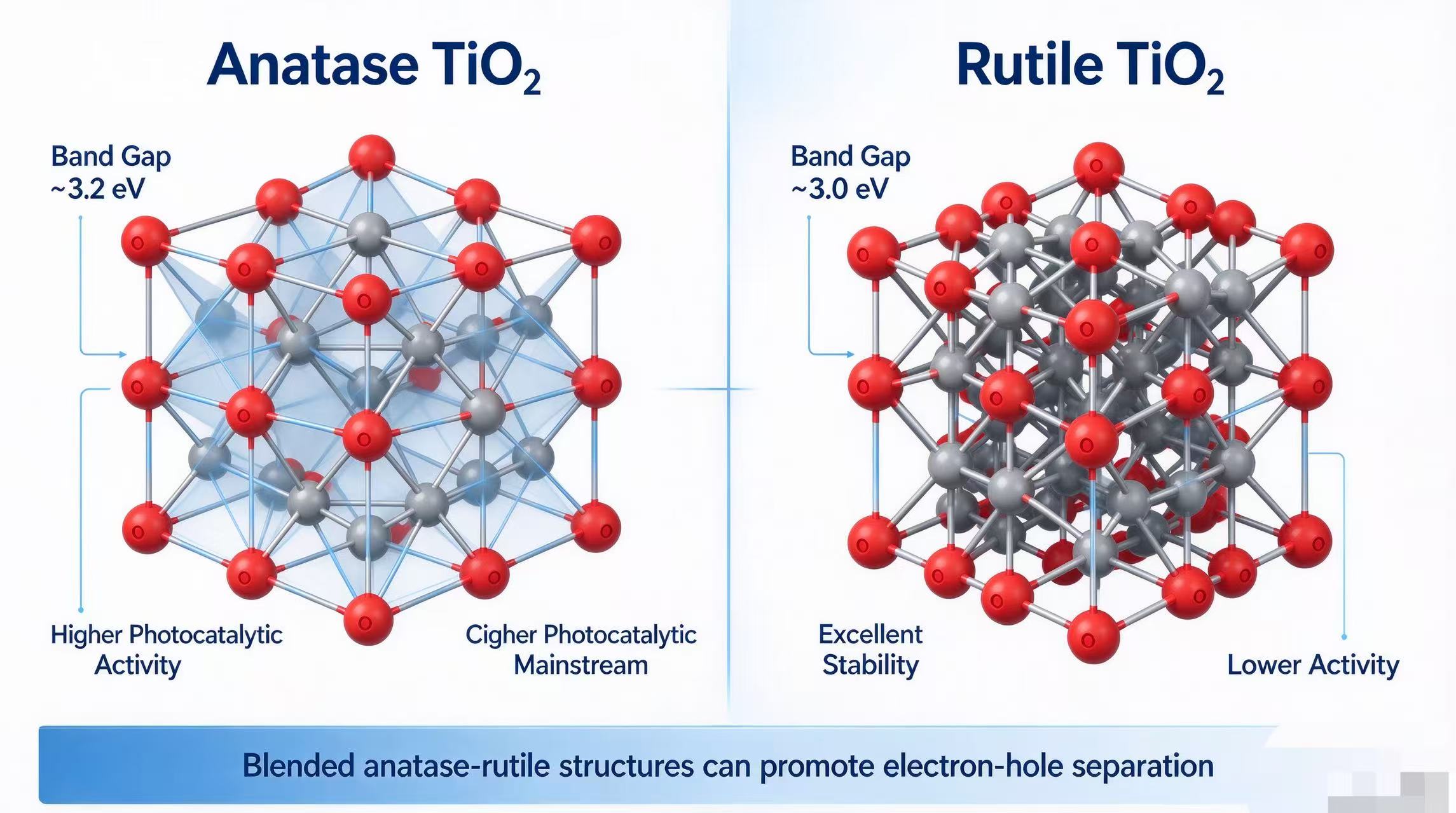
Definition and Basic Concepts
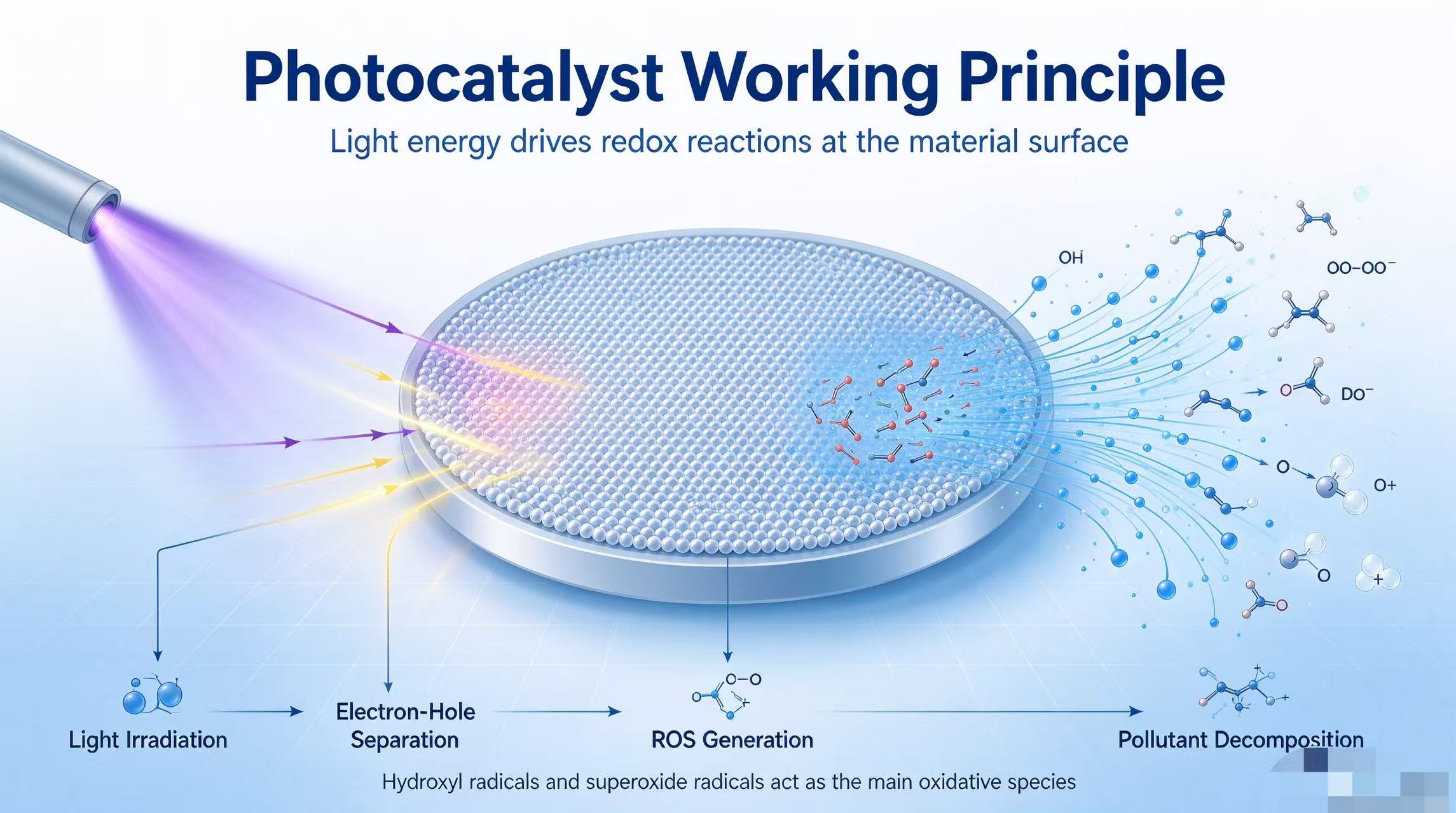
Photocatalyst is a compound word combining “Photo” (light) and “Catalyst”. As a class of semiconductor materials, photocatalysts trigger redox reactions of surrounding substances under specific‑wavelength light irradiation, without being consumed or chemically altered themselves.
It converts light energy into chemical energy and creates strong redox capacity on material surfaces. This enables decomposition of organic pollutants, microbial inactivation and transformation of hazardous inorganic compounds.
Unlike traditional thermal catalysts that rely on heat energy, photocatalysts are driven by light. They operate at room temperature and atmospheric pressure, requiring no high‑temperature environment. This makes them ideal for indoor air remediation and building self‑cleaning scenarios. Since photocatalysts are not depleted during reactions, they can deliver consistent performance over long‑term use, which sets them apart from disposable disinfectants and physical adsorption filters.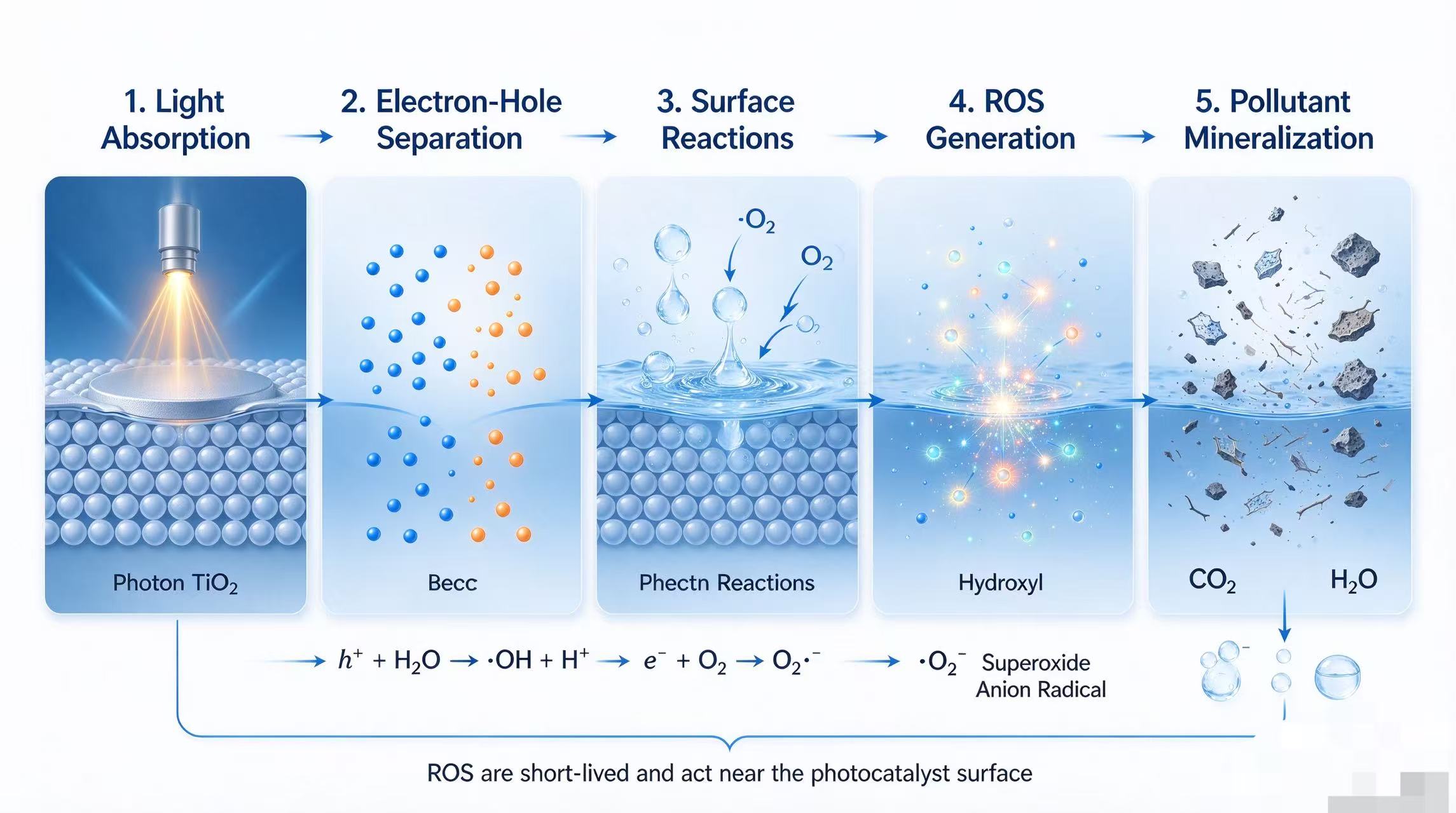
Classification of Common Photocatalyst Materials
Photocatalytic materials cover metal oxides, metal sulfides, nitrides and organic semiconductors. Titanium dioxide (TiO₂) is the most mature and widely adopted commercial option.
TiO₂ has three crystal phases:
- Anatase: Band‑gap ~3.2 eV, highest photocatalytic activity, dominant for commercial products
- Rutile: Band‑gap ~3.0 eV, excellent stability yet lower activity
- Brookite: Rarely used due to unstable crystal structure
Blended anatase‑rutile powder (such as Degussa P25 with 80:20 ratio) improves electron‑hole separation and delivers enhanced catalytic performance.
Other well‑known materials include ZnO, CdS, graphitic carbon nitride (g‑C₃N₄), Bi₂WO₆. Modern modification techniques including noble‑metal deposition, ion doping and heterojunction construction help develop visible‑light‑responsive photocatalysts, overcoming the limitation that conventional TiO₂ only responds to UV light.
Core Advantages for Air Treatment
Photocatalysts are popular for environmental applications thanks to these key strengths:
- High chemical stability & biological inertness: TiO₂ is acid‑alkali resistant and anti‑photocorrosion. Approved by FDA for cosmetic and food‑additive usage, it delivers proven safety.
- Zero secondary pollution: Final reaction outputs are carbon dioxide and water.
- Durable performance: The material does not wear out; stable coating maintains purification performance for years.
- Mild operating conditions: Works with simple light illumination at ambient temperature, very low power consumption.
- Broad‑spectrum purification: Produced hydroxyl radicals non‑selectively break down most organic VOC contaminants, and inactivate bacteria, viruses and fungi.Verified through repeated internal testing by LUFUTATECH, our branded air treatment units mainly adopt mature TiO₂ photocatalyst modules for formaldehyde, BTEX and TVOC reduction.
How the purification reaction works
When exposed to suitable light, photogenerated electrons and holes migrate to the photocatalyst surface and generate Reactive Oxygen Species (ROS). These ROS act as real working agents for oxidative decomposition.
Hydroxyl radicals and superoxide radicals produced during photocatalysis possess extremely high oxidation potential. They mineralize organic pollutants step‑by‑step. Notably, reactive oxygen species have microsecond‑level lifespans and only function near the material surface, bringing no harm to human cells at a distance.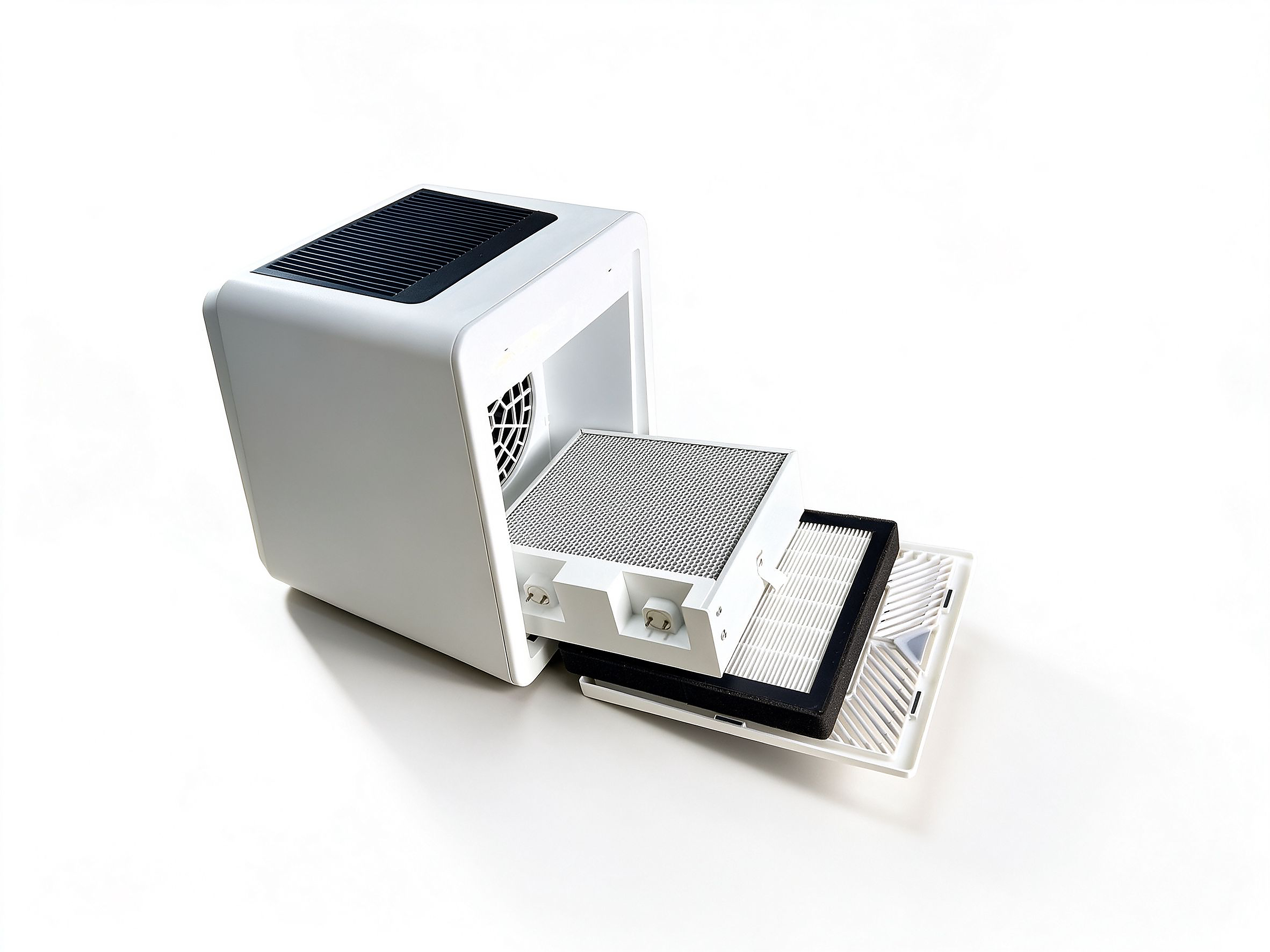
Summary
Photocatalysis offers a sustainable air‑purification path. Nevertheless, practical performance heavily depends on material formula, coating quality and light‑source matching. Unoptimized photocatalyst modules will barely deliver expected real‑world effects.
LUFUTATECH keeps optimizing TiO₂ photocatalyst solutions for air purifiers and ventilation devices, targeting the European and North‑American indoor‑air market.